SPIDER VEINS

What are Spider Veins?
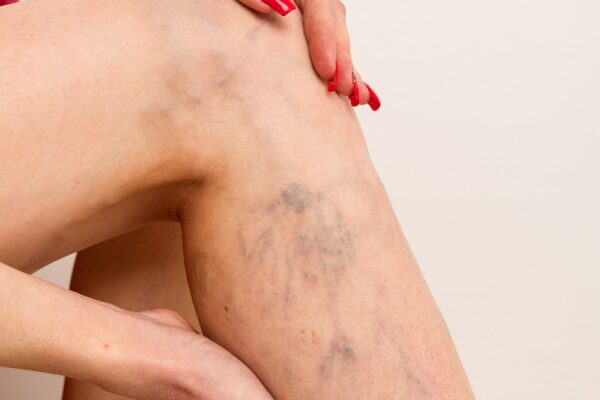
Spider Veins are small, twisted blood vessels that are visible through the skin. They may be red, purple, or blue and most often appear on the legs or face. They take their name from their striking spiderweb pattern.
What causes Spider Veins?
Healthy veins carry blood to the heart, passing through a series of one-way valves that prevent backflow. Veins are surrounded by muscles, which contract and force blood through these valves, moving in the correct direction towards the heart. However, problems with these valves, muscles, or the blood itself can cause blood to pool within a vein. As blood collects, pressure builds and the vessel walls weaken. As a result, the vein may bulge and twist. Depending on the size of the blood vessel and extent of swelling, the result is a spider vein.
Who gets Spider Veins?
Anyone can get spider veins, but women are twice as susceptible as men. These conditions are also more common in individuals with jobs that require them to remain standing for extended periods of time. Other factors that may contribute to the development include obesity, pregnancy, prior trauma, history of surgery within the leg, genetic predisposition, and certain other medical conditions.
Diagnosing Spider Veins
Spider veins are easy to diagnose. The initial examination begins with a review of the patient’s medical history, medications, prior procedures, and lifestyle habits.
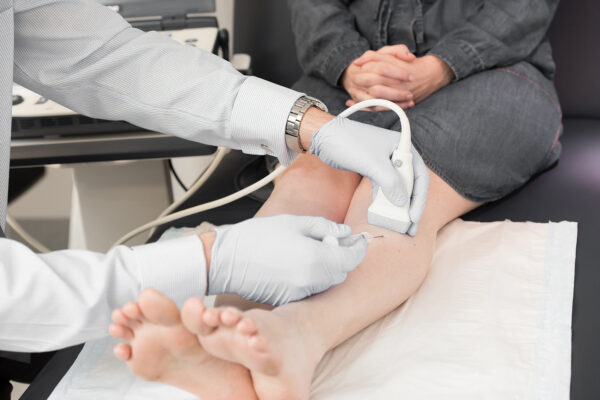
Next, there is a physical examination, focusing on the legs, feet, and other affected areas. This exam will check for swelling, tender spots, and any changes in skin color. Varicosities that cause pain, soreness, and muscle fatigue or cramping are examined further with an ultrasound. This exam does not hurt and takes about an hour to complete. A series of blood vessel measurements will be taken to determine the degree of varicose vein insufficiency. Based on these measurements and the individual’s symptoms, a treatment plan will be made. Cosmetic treatments for Spider and Varicose veins are usually not covered by most insurances.

SPIDER VEINS TREATMENTS
Sclerotherapy
A Trusted Treatment for Spider Veins
At Loop Medical Center, we understand that spider veins can be a cosmetic concern and sometimes cause discomfort. Sclerotherapy is a safe, time-tested, and effective treatment for the cosmetic improvement and symptom relief of spider and smaller varicose veins.
How Sclerotherapy Works
Sclerotherapy is a minimally invasive procedure performed right in our office. It involves the injection of a special solution, called a sclerosant, directly into the unwanted vein. This solution irritates the lining of the blood vessel, causing it to swell and stick together, effectively sealing it off. Blood is then rerouted through healthier veins, and the treated vein gradually fades from view as it is reabsorbed by the body.
What to Expect
Before the Procedure: Your journey begins with a thorough consultation with one of our specialists. We will review your medical history and conduct a physical examination to ensure sclerotherapy is the right treatment for you. This may include a non-invasive ultrasound to map your veins and identify any underlying issues. We will provide you with pre-procedure instructions, such as avoiding certain medications and lotions on the day of your appointment.
During the Procedure: The treatment is performed in a comfortable, relaxed setting and typically takes between 15 to 45 minutes, depending on the number of veins being treated. Using a very fine needle, our specialist will inject the sclerosant into each targeted vein. You may feel a slight pinch or a mild burning sensation as the solution enters the vein, but the procedure is generally well-tolerated and does not require anesthesia.
After the Procedure: You can return to your normal activities immediately following the treatment, though we recommend a short walk to encourage blood circulation. We may advise you to wear compression stockings for a period of time to help maintain pressure on the treated veins and optimize results. You should avoid strenuous exercise and prolonged sun exposure on the treated areas for a couple of weeks to prevent complications.
Results and Recovery: Most patients experience little to no downtime. The treated veins typically begin to fade within a few weeks, with full results becoming visible over a few months. In some cases, a series of treatments may be recommended to achieve the desired outcome. The veins that are successfully treated will not reappear, though new spider veins can form over time.
While sclerotherapy is a very safe procedure, some temporary side effects may occur at the injection site, including bruising, swelling, redness, or small raised red areas. These effects are normal and usually disappear within a few days to weeks. We will discuss all potential risks and side effects with you during your consultation.
Note: As this is primarily a cosmetic procedure, it is generally not covered by insurance. However, we will work with you to determine if there are any medical reasons for your treatment that may qualify for coverage.